

By Martin Zähringer and Jane Tversted
First published in German in the magazine Kommune 2013
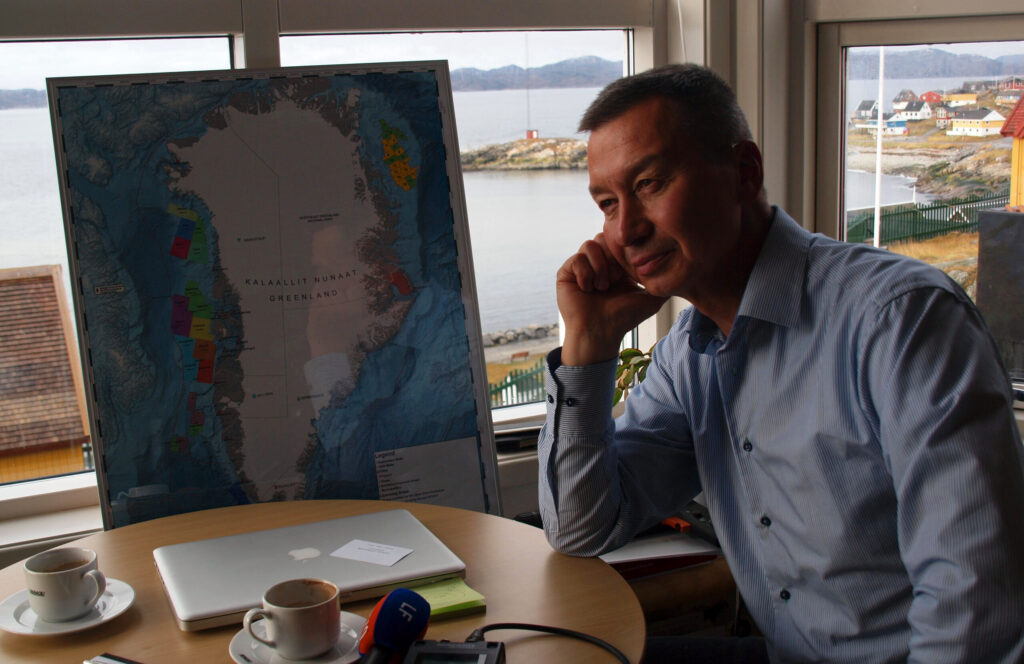
Greenland is the largest island in the world. Although only 57,000 people live here, they see themselves as an independent nation. In addition to block grants from Denmark and subsidies from the EU, the majority of the national income comes from hunting and fishing. If the visions of economic independence and greater prosperity for Greenlanders are to become reality in the future, new sources of income must be found. Will Greenland’s rich mineral resources save the country?
PART ONE – RESOURCES FOR INDEPENDENCE?
„Indigenous peoples around the world, and the Inuit in particular, are very open to social change; they are very good at adapting to new circumstances. But the question is whether we are paying a high price for this, namely the disappearance of our culture.“
Aqqaluk Lynge, Politician, Writer, Activist
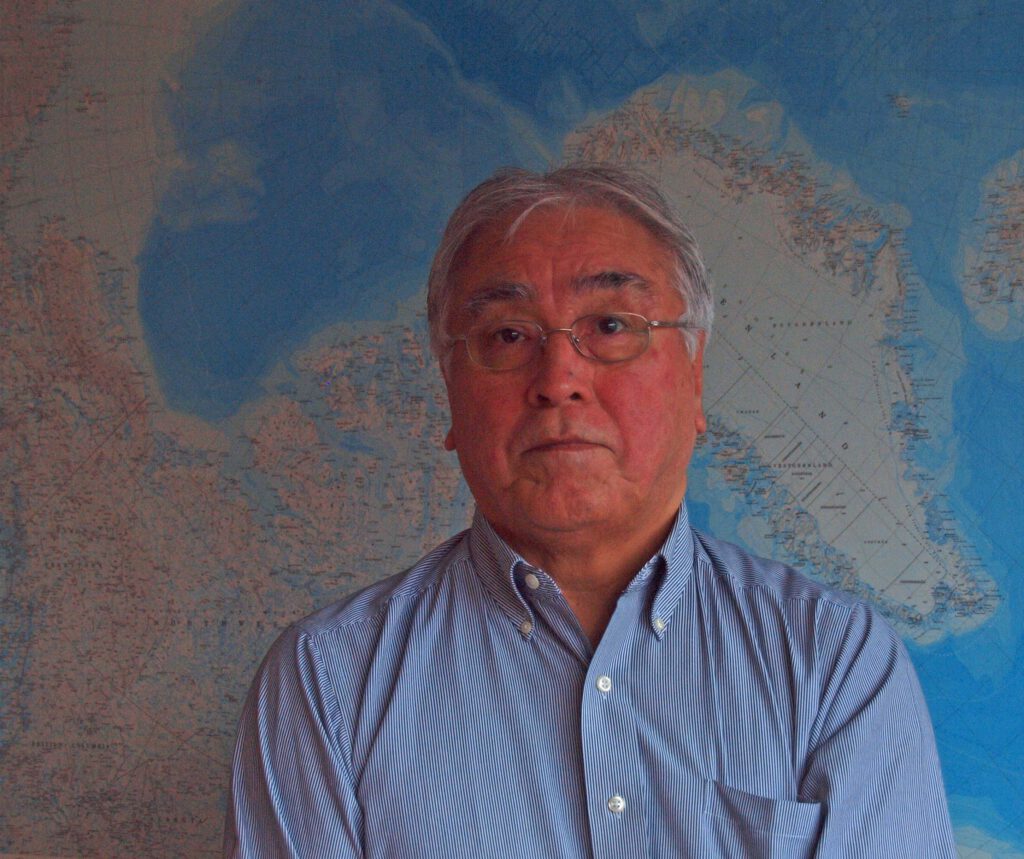
Greenlandic writer, journalist, politician, and human rights activist Aqqaluk Lynge is a voice of warning and caution. He is currently president of the Inuit Circumpolar Council (ICC). This NGO, co-founded by Lynge in 1975, represents the interests of all Arctic peoples, for example in the UN and the Arctic Council.
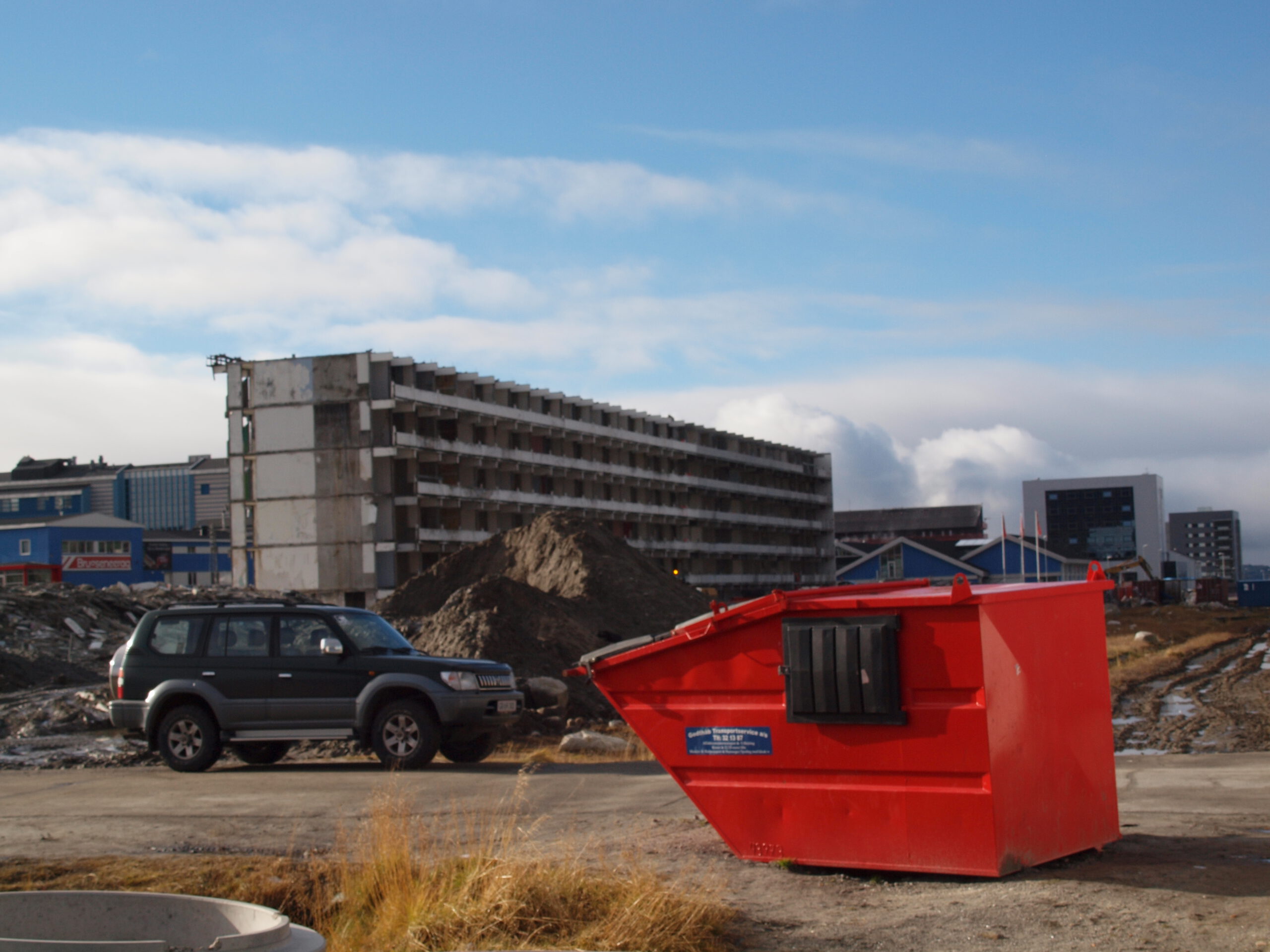
The ICC Greenland is located in a blue prefabricated building in the center of Nuuk. Right next door, Block P is being demolished, a huge, dilapidated social housing complex which, together with other prefabricated buildings in the center of Nuuk, bears witness to the settlement policy of the 1960s.
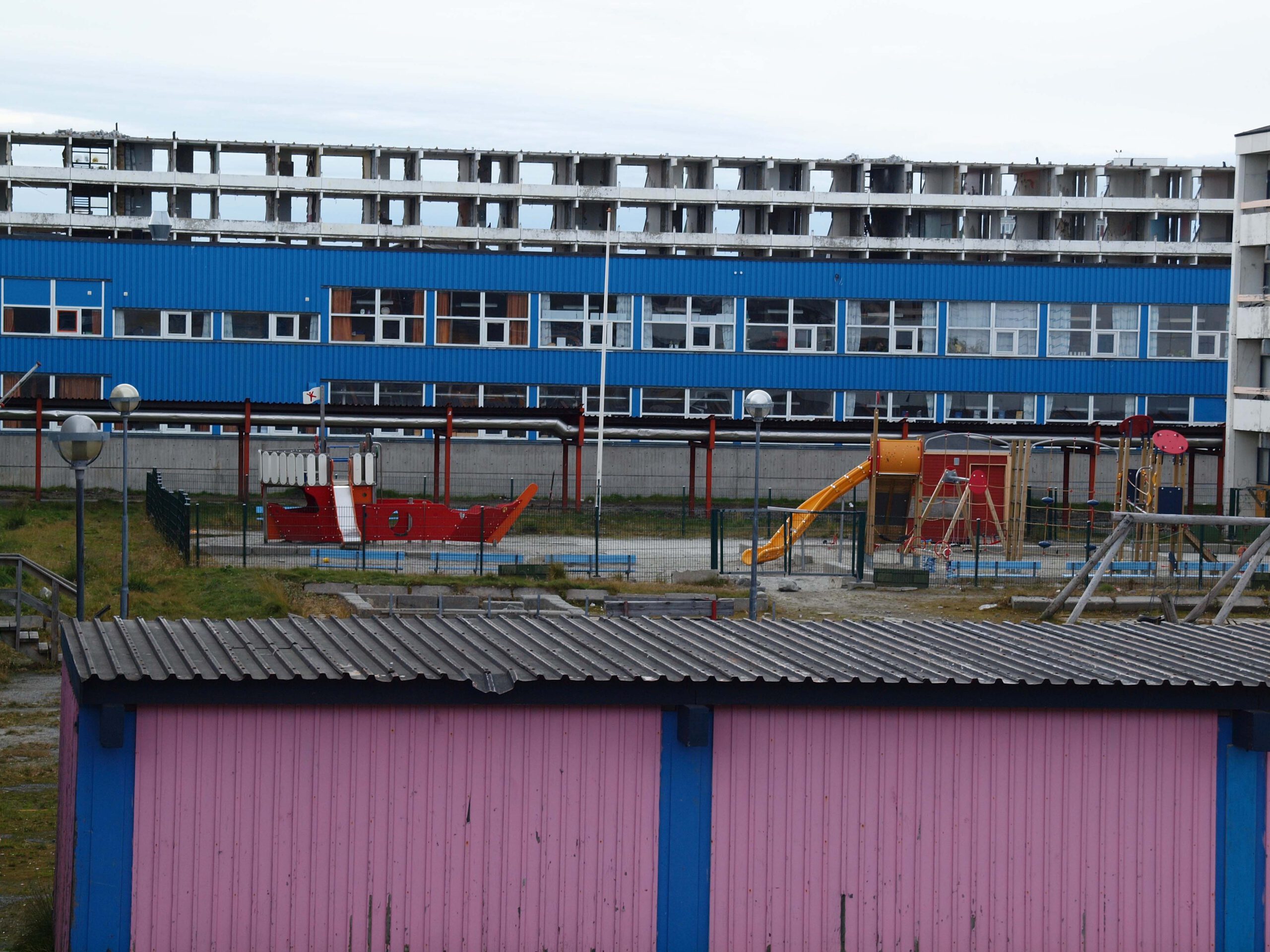
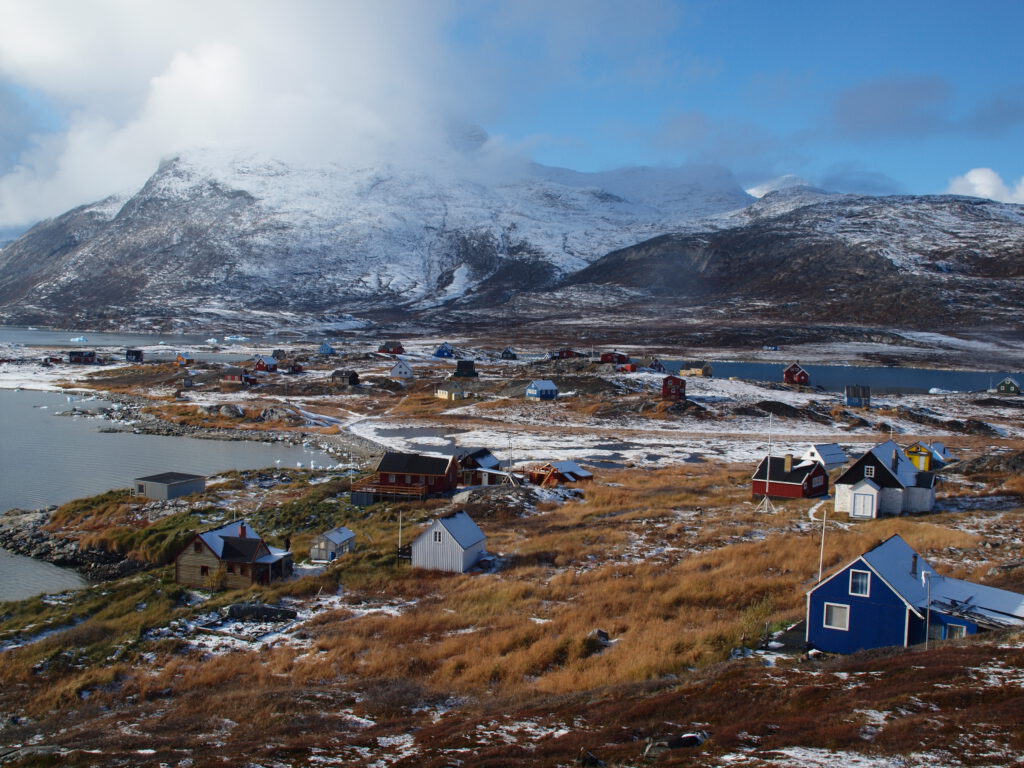
At that time, industrialization took place under the name G-60 (Greenland 60), numerous bygder (typical Greenlandic coastal villages) were closed, and the people were resettled in cities. Suddenly, Greenlandic villages were transformed into prefabricated buildings where the fishing industry could recruit its workers. However, the world’s view of the Inuit seems to have remained stuck in 1960:
„The world sees us primarily in two ways: On the one hand, people believe that we still live as we did 200 years ago. But you have to remember – we were a colony of the Danes for 300 years. And we are part of European society; from 1972 to 1975, we were even in the EC. We are a modern society with a large fishing industry, so we are already industrialized.“
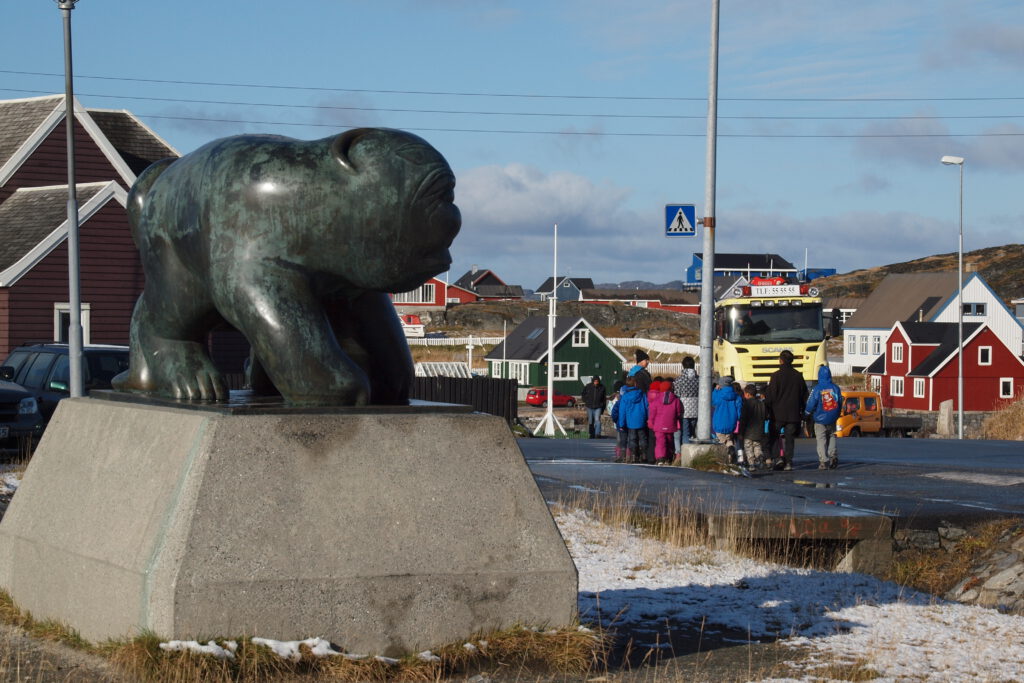
In fact, the living resources sector, Greenland’s traditional economic reservoir, is far from sufficient to finance an independent budget, and that is somehow the direction we want to go in:
„But the great desire for economic independence is a vision, and I share that vision. It’s just that there are limits to the pace of development.“
Lynge is referring to the major economic project in the country’s recent history, the imminent exploitation of Greenland’s ore and mineral deposits. These are intended to fill the hole in the national coffers until the long-term and truly revolutionary economic project becomes feasible: the exploitation of oil off the coast of Greenland.
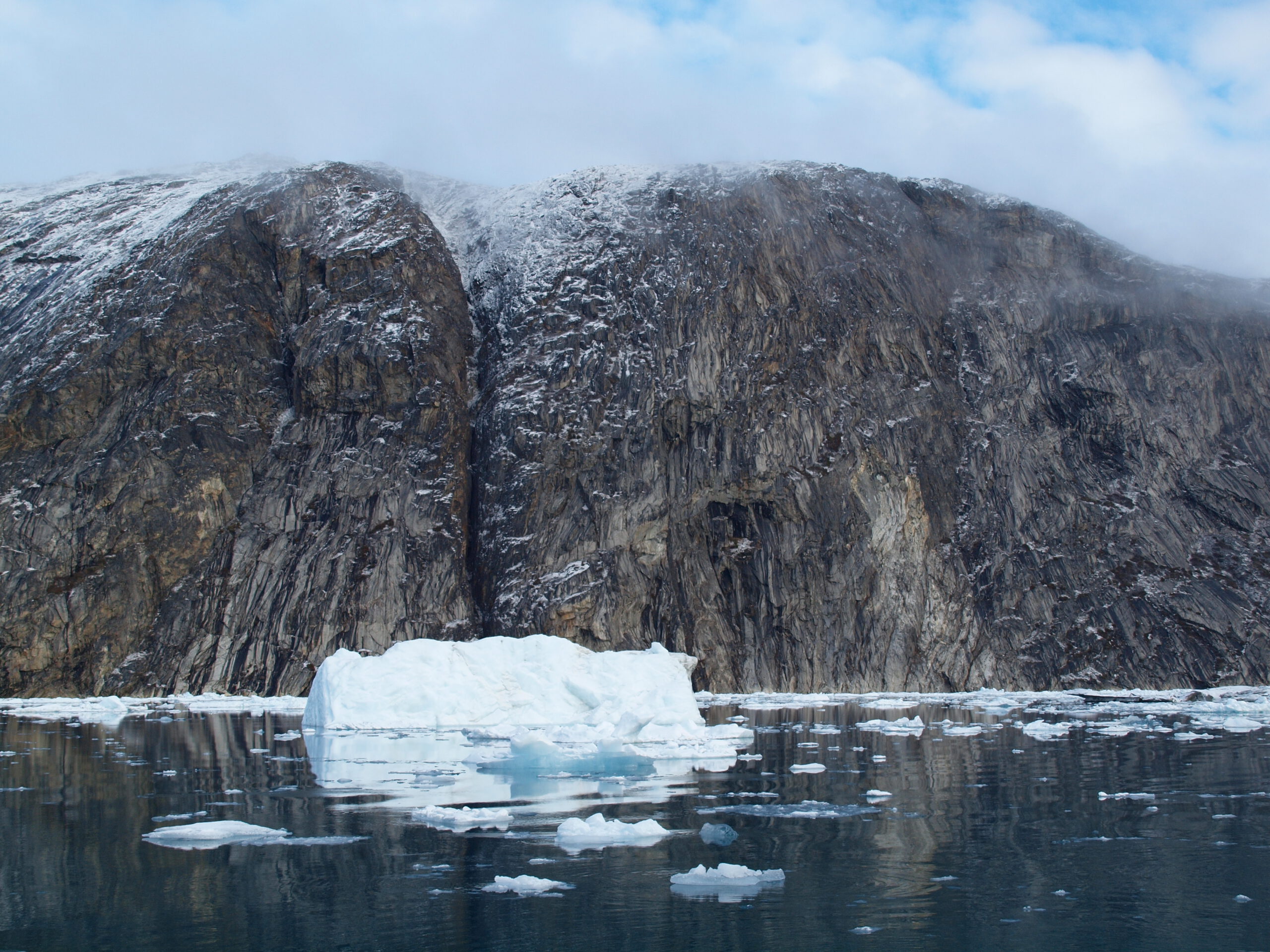
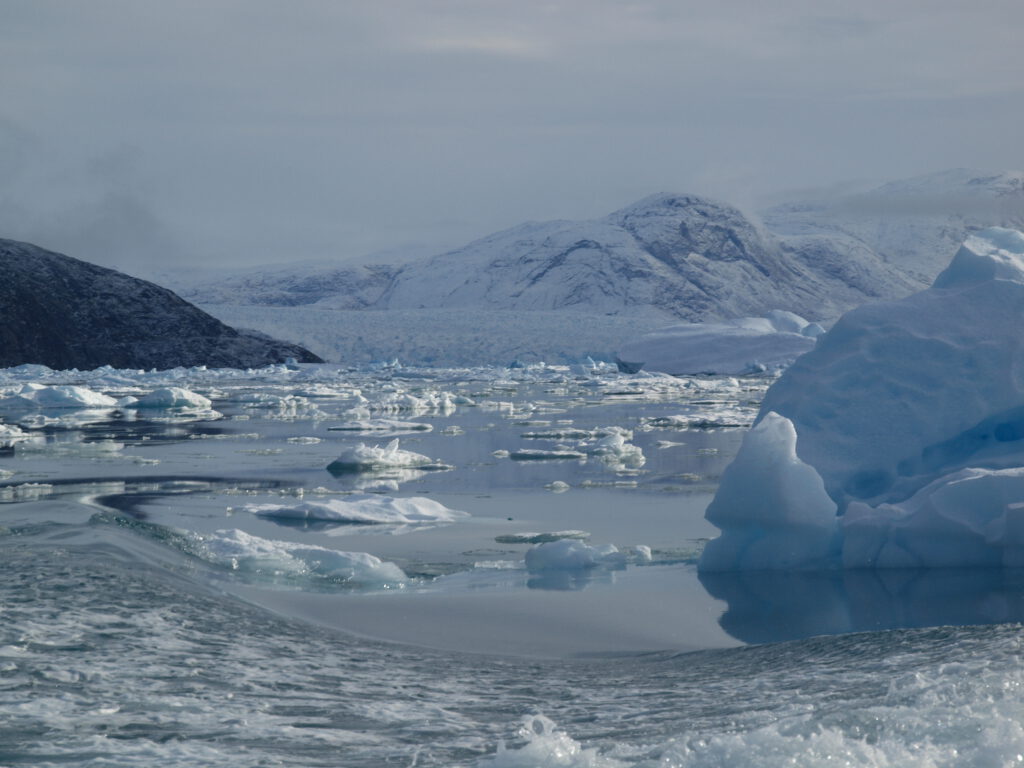
According to experts, the oil boom could come in the next 20 years, depending on how intensively corporations invest in test drilling to explore their already licensed claims. This brings us to the second aspect of the view that the world has of Greenland, according to Lynge, and which he criticizes: the conversion of climate change into an economic factor that makes Greenland appear to be easy prey for the markets and, in particular, for raw materials companies.
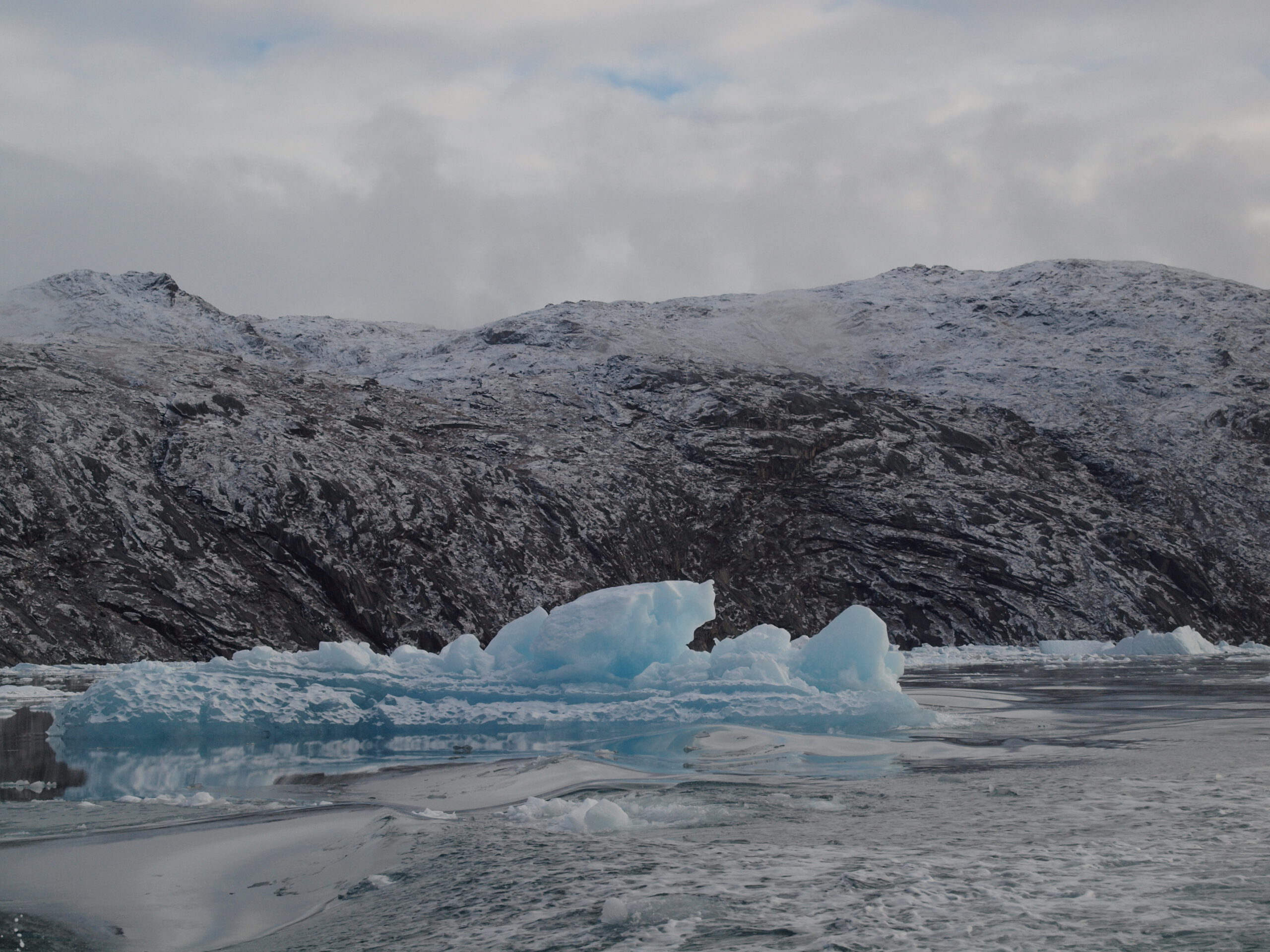
Lynge comments:
„Multinational companies and others are exploiting climate change. They are delighted: ‚Let’s go, these are even better conditions for exploiting the resources here.’“
In this article, we want to discuss the development and economic policy problems that arise in relation to resource policy in Greenland.
New power player: Inuit Ataqatigiit (IA)
At the center of this discussion is the INUIT ATAQATIGIIT (IA) party, which has been in power since 2009, representing the community of the Inuit/people. The IA’s party program of November 21, 1978, states its fundamental political objectives in §1. Article 1:
„To combat colonialism and neo-colonialist developments in all their forms on an anti-imperialist basis. To work as a starting point for the recognition of the collective property rights of the original people of KALAALIT NUNAAT (Greenland) as a nation with full sovereignty over its own land.“
The latter was almost achieved with the introduction of SELVSTYRE (lit. self-government) in 2009. But this does not solve the problems of a neocolonial nature. Under globalization, they are found in different circumstances than in the Denmark-Greenland constellation, which has determined the policy of HJEMMESTYRE (self-government) since 1979.
There is a certain irony in the fact that Aqqaluk Lynge, now responsible for criticising the government, is himself a founding member of this former protest party. Another ironic facet is the fact that the IA, which sees itself as socialist with its left-wing tradition, now that it is in power, has to act as a door opener for international raw materials companies such as London Mining or ALCOA.
This „must“ is a political necessity, because the agreement with the Danes on self-government also includes freezing the block grant from Denmark, which currently accounts for 45.6% of public revenue. This means that the government – committed to collective ownership – must now find ways to finance development and growth from its own resources.
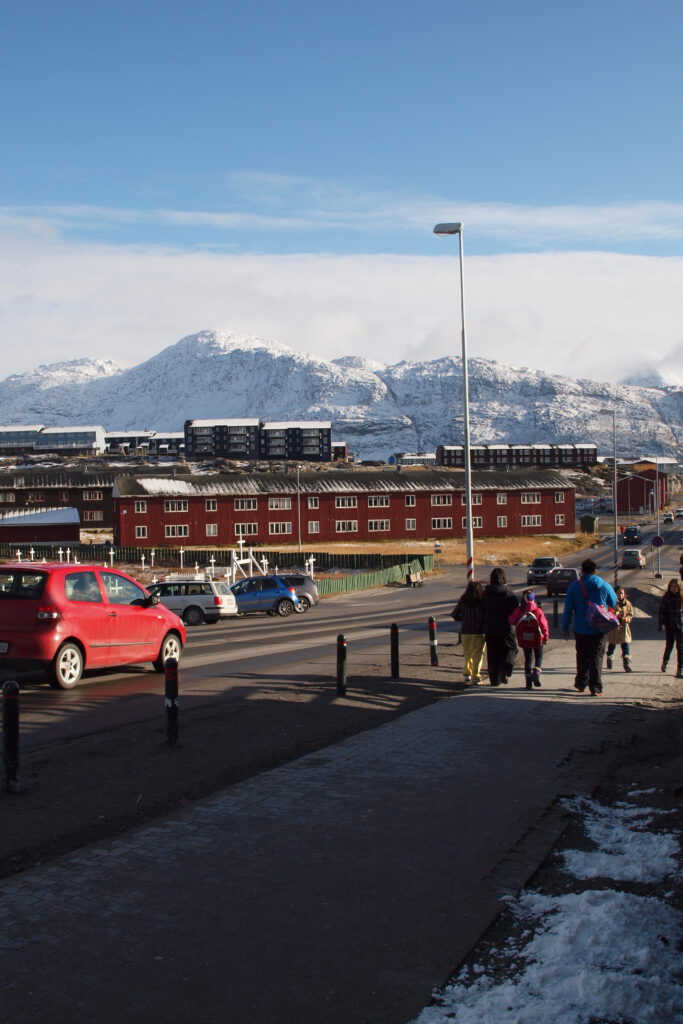
From colony to autonomy
Greenland has been linked to Denmark in a colonial relationship since the early 18th century and today, together with the Faroe Islands, belongs to the Rigsfællesskabet, the Commonwealth with the Danish queen as head of state. Within this Danish Commonwealth, Greenland has had self-government since 1979. Its decisive power holder was the social democratic party Siumut, with well-known names such as Jonathan Motzfeldt, Moses Olsen, and Lars Emil Johansen, also known as the Three Polar Bears. Siumut ruled alone until 1983, then in changing coalitions with the bourgeois party Atassut and also the IA.
In principle, however, the IA had been in opposition to the system since 1979 because, although it was firmly in favor of Greenland’s autonomy, it was against the introduction of Hjemmestyre. The reason: IA was not prepared to share decision-making power over natural resources with the Danish government and the Danish parliament, the Folketinget, in the long term. It demanded recognition of the Greenlanders as a people. This placed IA in an international struggle for the self-determination rights of indigenous peoples. Johan Lund Olsen, co-founder of IA, looks back on 1979:
„So we called on our voters to vote against the Hjemmestyre. And as a newly formed party, we received a very respectable 25% of the vote. We then stood for election to the INATSISARTUT [Landsting, national parliament], and in 1983 we entered for the first time with Aqqaluk Lynge and Jens Geisler. Since then, we have grown steadily, and now we are the largest party.“
The rights of indigenous peoples have also been strengthened in the meantime. Since 2007, there has been UN Resolution 61/295, which has also been ratified by Denmark, granting indigenous peoples the right to self-determination over their land and resources. With the introduction of self-government in 2009, the Greenlanders were recognized by Denmark as a people and thus their right to their own resources.
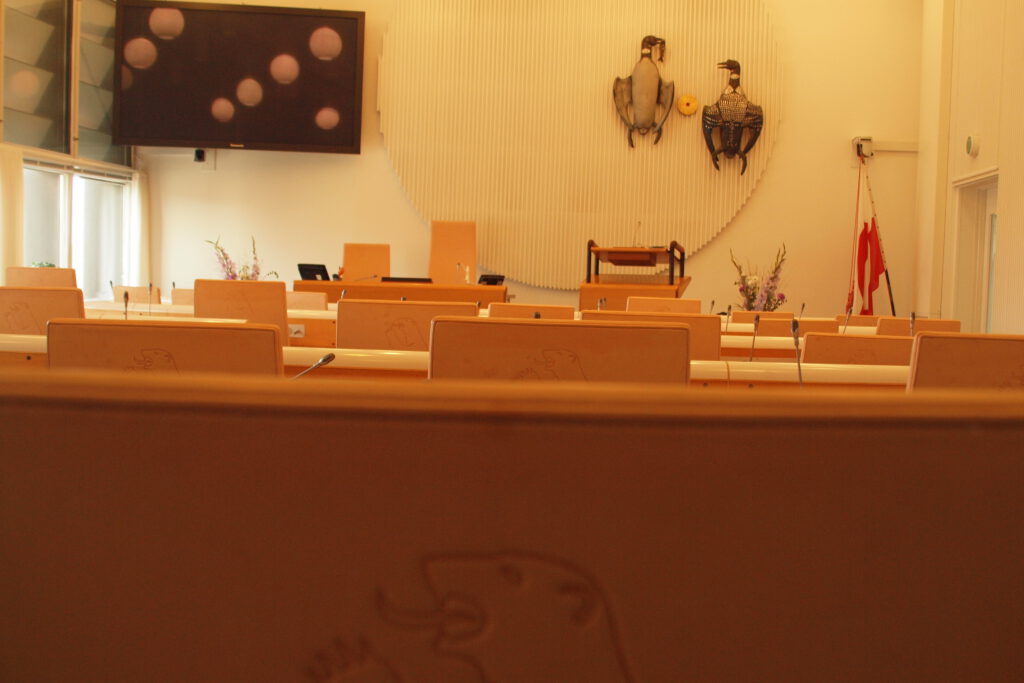
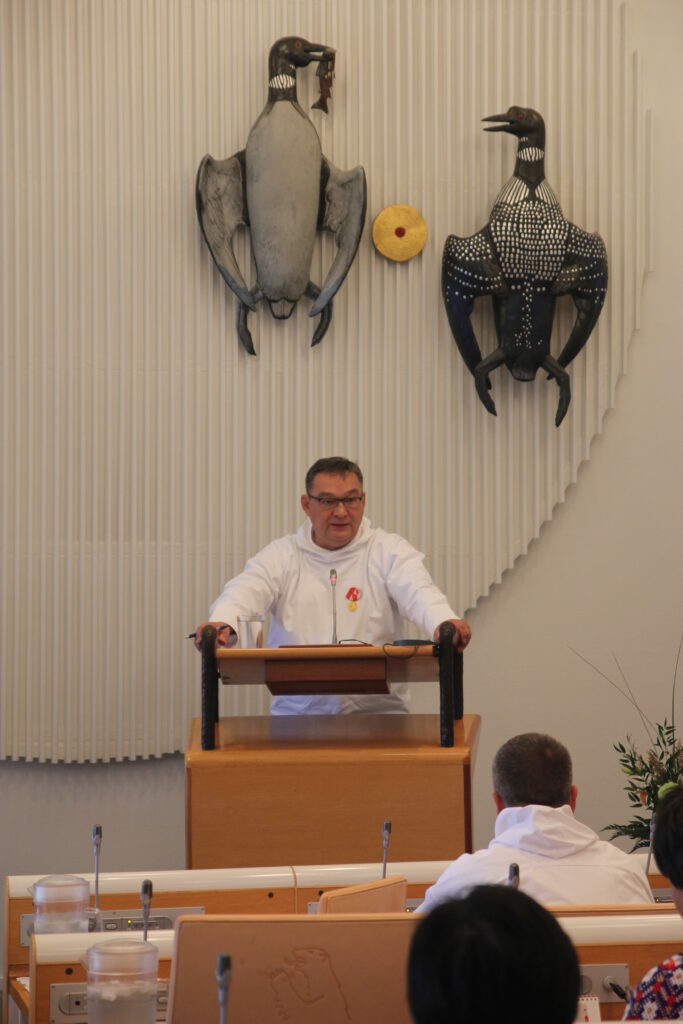
Johan Lund Olsen was a member of the Inatsisartut, Greenland’s parliament, for 20 years. In 2009, he decided not to run for re-election, but he still has his office in the Inatsisartut building in the party wing, where he now works as a political advisor to the IA. And the IA needs advice, because when it won a landslide victory in 2009, it was initially surprised by a home-grown financial crisis.
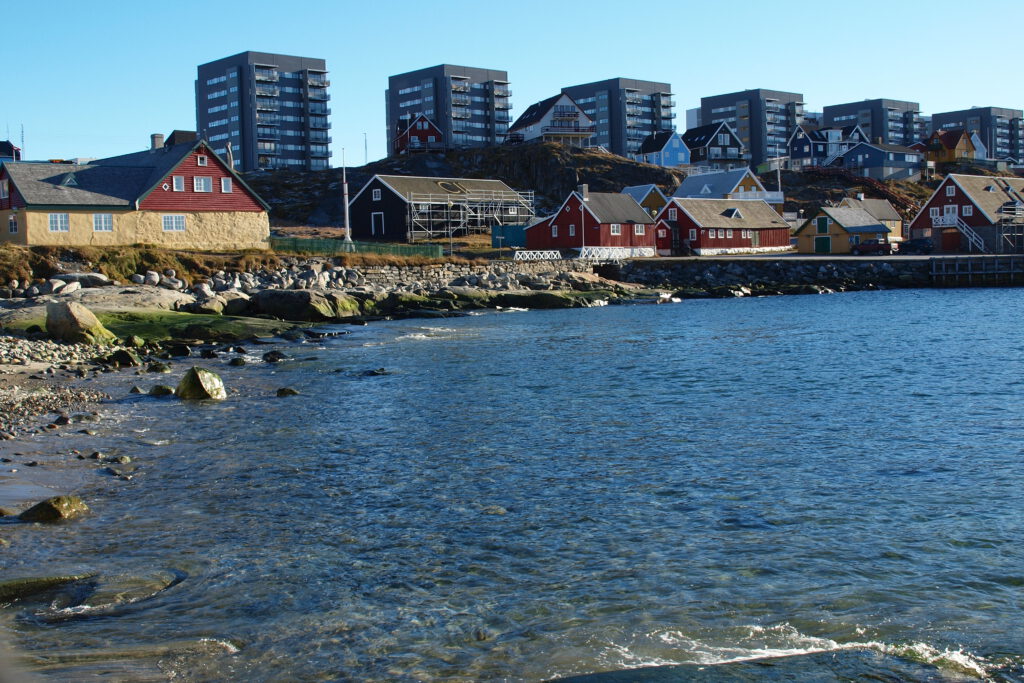
Shortly after the election, the new head of government, Kuupik Kleist, received a previously secret notice that Greenland’s state-owned corporation and largest employer, Royal Greenland, was facing bankruptcy. It had to be bailed out with 500 million kroner, and because that is a lot of money for the Greenlandic budget, the new government was initially unable to present itself in the light of its political intentions due to austerity measures and the closure of fish factories.
However, a fairer social and tax policy remains on the agenda:
„We are currently working on a major tax reform. This is one of our biggest dreams in the entire history of the party. We want to abolish the Greenlandic tax system. This tax system has always been flat, i.e. proportional. There is no progressivity whatsoever. Whether you are a millionaire or a normal welfare recipient, you have the same tax rate. And that is very antisocial, a poor distribution of social resources.“
Olsen is confident that the planned redistribution will create a stronger middle class. This is not unimportant for his party, because the middle class makes up a large part of the IA electorate. And then there are the many unskilled workers, unemployed people, and workers in the fishing industry and municipal enterprises. In the eyes of their political advisor, they pose a particular challenge for the government:
„It’s about managing power in a way that meets the wishes and demands of the underprivileged. There are very big differences between rich and poor.“
On the coast
Johan Lund Olsen, a member of the party’s left wing, still sounds optimistic, and Juliane Henningsen also emphasizes the egalitarian character of IA social policy. In 2009, she was one of two representatives in the Danish Folketinget. At just 22 years old at the time, she received the most personal votes in that election. She is currently a member of the Inatsisartut, a board member of the state-owned cultural foundation NUNAFOND, and is also completing her education at Ilisimatusarfik, the University of Nuuk.
Before we met in 2012, Juliane Henningsen had spent a year in East Greenland and is now particularly sensitive to the ongoing issue of discrimination against coastal residents:
„There are many local problems in such a small town that absolutely must be solved. And it is also a central issue in Greenlandic politics how to prioritize and treat the outlying districts. There are many questions regarding the level and standard of living, the economy, and infrastructure. After gaining a broad perspective on the country, it was crucial for me to work on these issues. It completely changed my view of things.“
It is not easy for young politicians to make the voices of the periphery, of „the coast,“ as the province in Nuuk is called, heard.
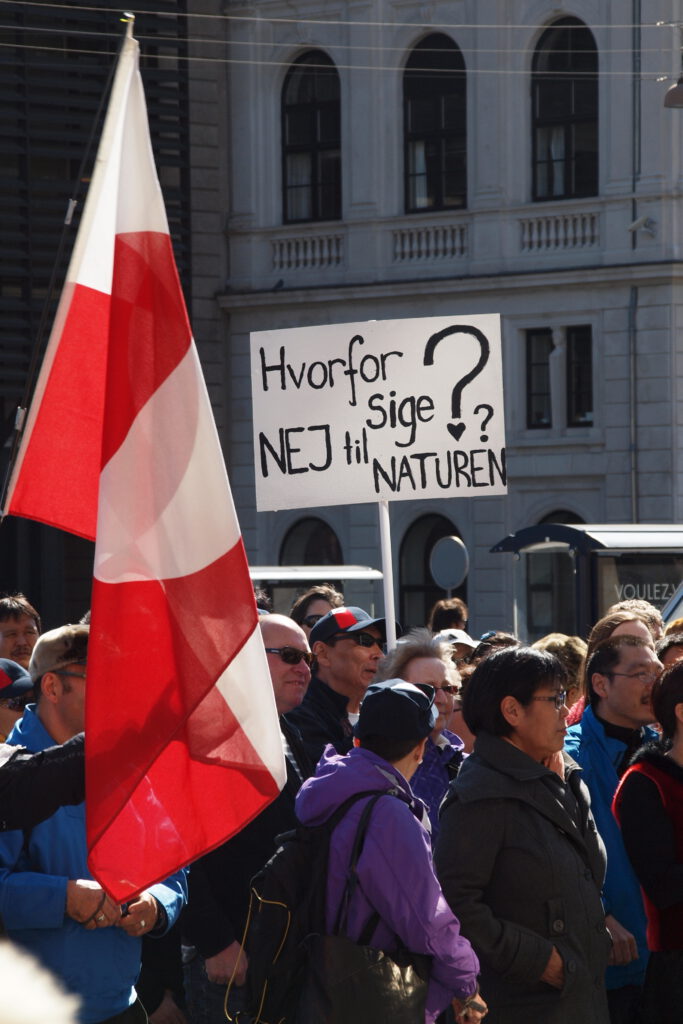
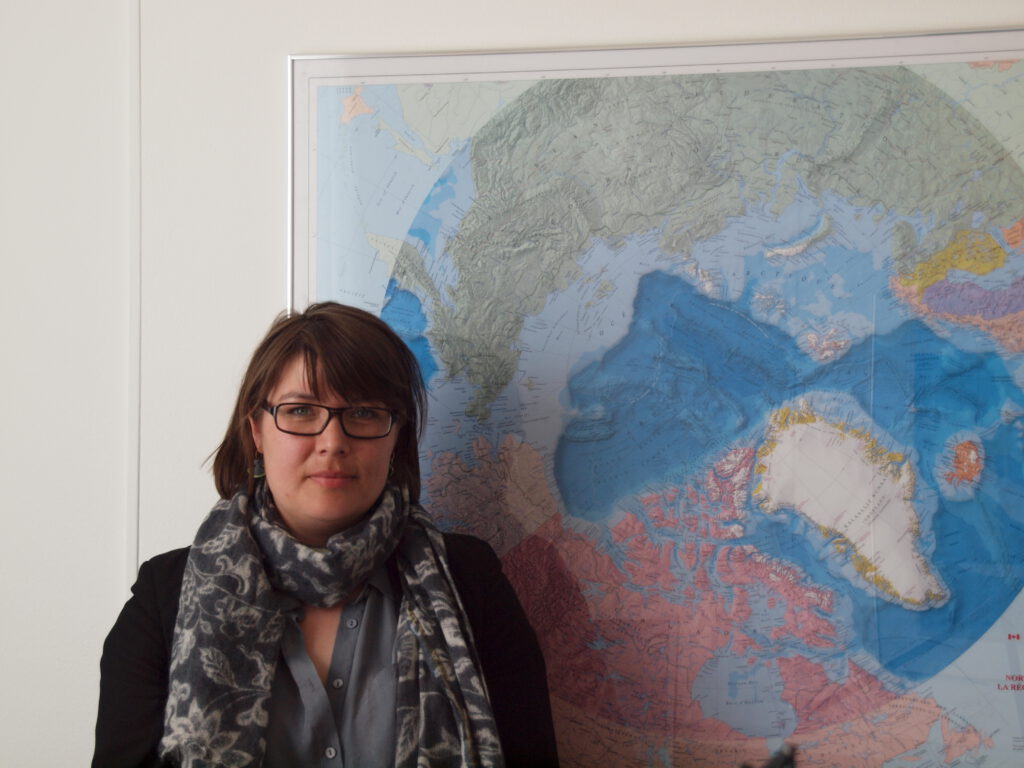
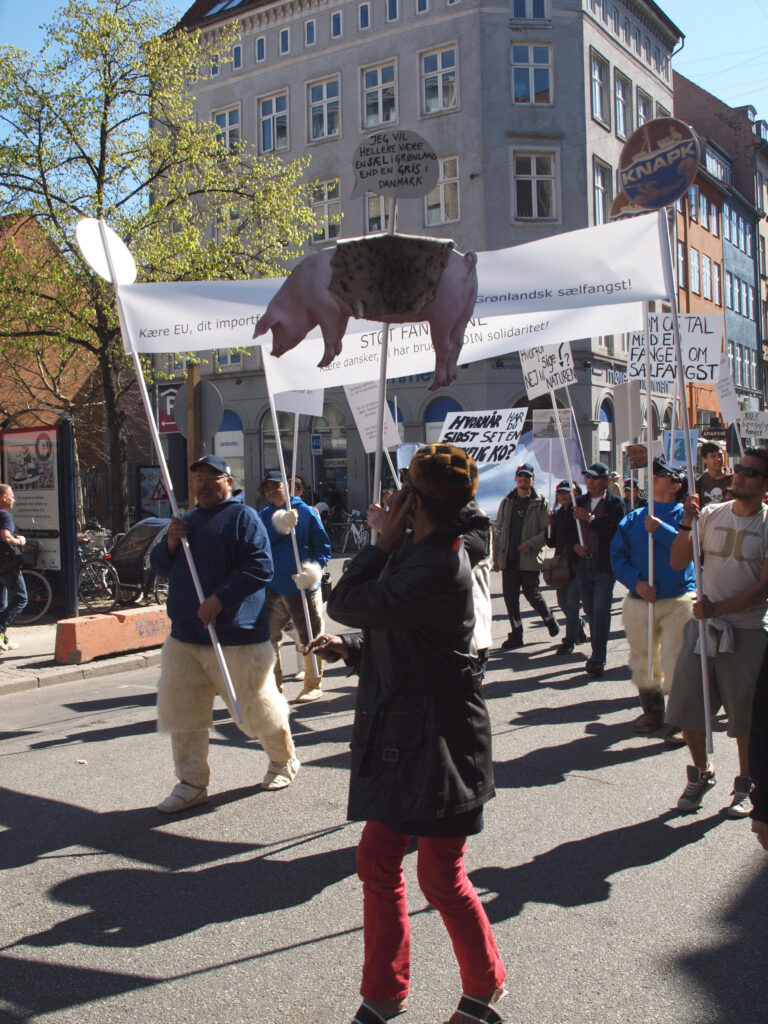
Sara Olsvig, another young IA politician, currently representing Greenland in the Folketinget in Copenhagen, has extensive experience with „the coast“ as a trained anthropologist and former human rights coordinator for the ICC. She is very familiar with the economic disaster caused by the seal fur boycott, which has hit coastal residents particularly hard.
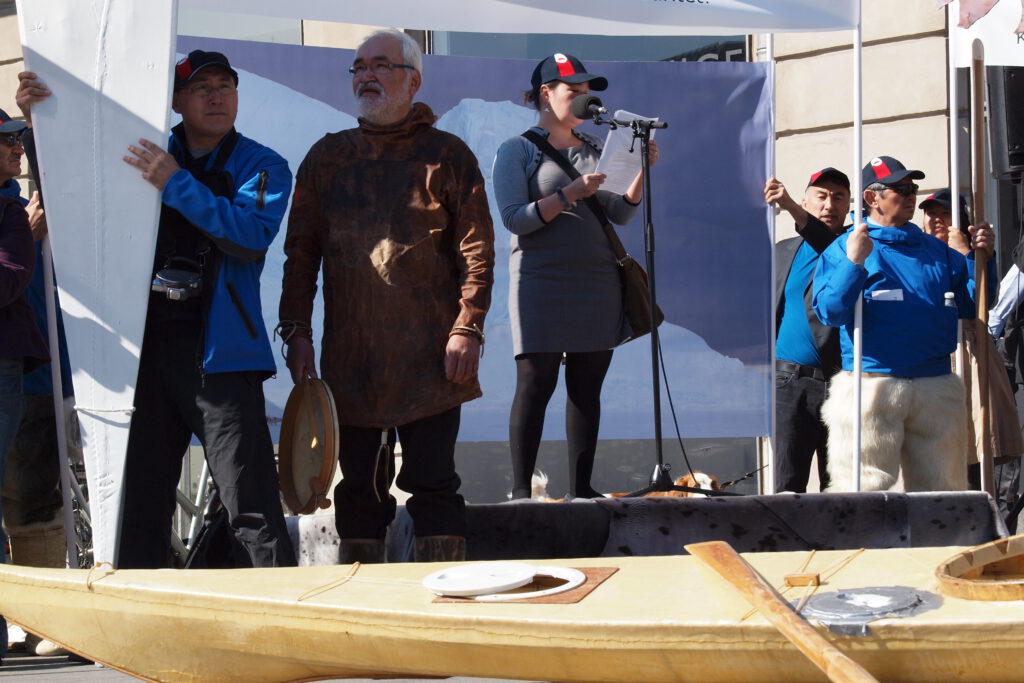
We met Sara Olsvig in Copenhagen in May 2012, when a delegation of East Greenlandic hunters was there to demonstrate for their rights. Olsvig was optimistic that the market for traditional products would reopen:
„I do believe that the sales prospects for sealskins are improving again. I can only think of one biologist who has expressed a negative opinion. But we have received positive commitments from the WWF and Greenpeace regarding sealskins, and I think it was really time for these organizations to publicly speak out in favor of our sealskin industry.“
This is particularly important because even in Denmark, a large part of the population is unaware that there is an exemption for Greenlandic sealskin. Sara Olsvig is very aware of the cultural significance of Greenland’s coastal hunting and fishing communities, but she is also at the center of the issue that is currently dominating the political debate. This issue sets crucial conditions for Greenland’s future:
„There has always been this idea that Greenland’s independence would only be realistic if we found oil or set up mines. And that’s why, in my opinion, it was sometimes very unpopular to speak out against these projects. If a Greenlander speaks out against a major commercial project, they are quickly suspected of being against the country’s development. But it’s not about preventing development, it’s about pursuing it on a responsible basis.“
This is not only the focus of the government’s economic policy, but also, as is becoming increasingly clear, a profound social debate in Greenland.